
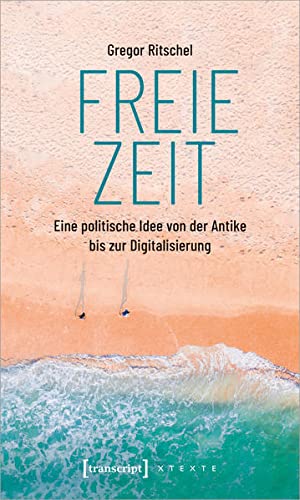
Freie Zeit : Eine politische Idee von der Antike bis zur Digitalisierung / Gregor Ritschel.
Material type: TextLanguage: German Series: X-Texte zu Kultur und GesellschaftPublisher: Bielefeld : transcript Verlag, [2021]Copyright date: ©2021Description: 1 online resource (274 p.)Content type:
 - text
- computer
- online resource
- 9783839455722
- Arbeits- und Industriesoziologie
- Freizeit
- Ideengeschichte
- Leben
- Politik
- Politikwissenschaft
- Politische Theorie
- Sozialgeschichte
- Zukunft der Arbeit
- POLITICAL SCIENCE / History & Theory
- Future of Work
- History of Ideas
- Leisure
- Life
- Political Science
- Political Theory
- Politics
- Social History
- Sociology of Work and Industry
- 306.481209 23/ger
| Cover image | Item type | Current library | Home library | Collection | Shelving location | Call number | Materials specified | Vol info | URL | Copy number | Status | Notes | Date due | Barcode | Item holds | Item hold queue priority | Course reserves | |
|---|---|---|---|---|---|---|---|---|---|---|---|---|---|---|---|---|---|---|
 E-Book
|
De Gruyter | Available |
Frontmatter -- Inhalt -- 1. Einleitung -- 2. Die Idee der Muße von der Antike bis zur frühen Neuzeit -- 3. Exkurs -- 4. Das 18. Jahrhundert -- 5. Das 19. Jahrhundert -- 6. Das 20. Jahrhundert -- 7. Das 21. Jahrhundert -- 8. Free days for future! -- 9. Literatur -- 10. Danksagung
unrestricted online access star
"The realm of freedom actually begins only where labour which is determined by necessity and mundane considerations ceases" - Karl Marx once said. And today? Despite extensive automatisation, the norm of full-time work remains. The motto "social is what creates work" is supported by almost all political actors. At the same time, the previous form of a full-time working society is becoming more fragile and unequal: the care crisis, the gender pay gap, precarious jobs or unregulated crowdwork on digital platforms reveal just a few of the many yield lines. Considering the history of political ideas on free time and the current debates on automatisation and digitalisation, Gregor Ritschel drafts a plea for a gradual exit from the previous working society into a "multi-activity society" (André Gorz). He reveals that shortening working hours can enable us to create a more social, more creative and also more environmentally friendly world.
»Das Reich der Freiheit beginnt in der That erst da, wo das Arbeiten, das durch Noth und äußere Zweckmäßigkeit bestimmt ist, aufhört« - so einst Karl Marx.Und heute? Trotz weitgehender Automatisierung bleibt die Norm der Vollzeitarbeit bestehen. Das Motto »Sozial ist was Arbeit schafft«, wird von fast allen politischen Akteuren getragen. Zugleich wird die bisherige Form der Vollzeitarbeitsgesellschaft in vielen Momenten brüchiger und ungleicher: Pflegekrise, Gender-Pay-Gap, prekäre Jobs oder unregulierte Crowdwork auf digitalen Plattformen offenbaren nur einige der vielfältigen Bruchlinien.Mit Blick auf die politische Ideengeschichte der freien Zeit und die aktuellen Debatten um Automatisierung und Digitalisierung entwirft Gregor Ritschel ein Plädoyer für den schrittweisen Ausgang aus der bisherigen Arbeits- in eine »Multiaktivitätsgesellschaft« (André Gorz). Er zeigt: Eine Verkürzung der Arbeitszeit kann uns eine sozialere, kreativere und auch umweltschonendere Welt ermöglichen.
funded by transcript: Open Library 2021 (Politik)
Mode of access: Internet via World Wide Web.
This eBook is made available Open Access under a CC BY-NC-ND 4.0 license:
https://creativecommons.org/licenses/by-nc-nd/4.0
https://www.degruyter.com/dg/page/open-access-policy
In German.
Description based on online resource; title from PDF title page (publisher's Web site, viewed 01. Dez 2022)
There are no comments on this title.