
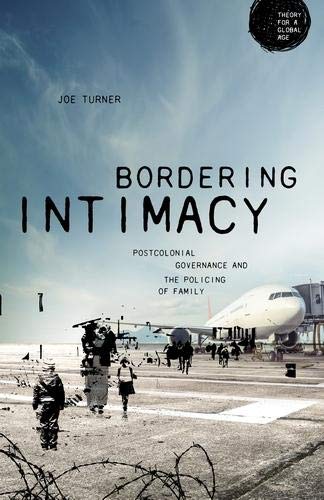
Bordering intimacy : Postcolonial governance and the policing of family
Material type: TextPublication details: Manchester Manchester University Press 2020Description: 1 electronic resource (312 p.)ISBN:
 - 9781526146946
| Cover image | Item type | Current library | Home library | Collection | Shelving location | Call number | Materials specified | Vol info | URL | Copy number | Status | Notes | Date due | Barcode | Item holds | Item hold queue priority | Course reserves | |
|---|---|---|---|---|---|---|---|---|---|---|---|---|---|---|---|---|---|---|
 E-Book
|
Directory of Open Access Books | Not For Loan |
Bordering intimacy is a study of how borders and dominant forms of intimacy, such as family, are central to the governance of postcolonial states such as Britain. The book explores the connected history between contemporary border regimes and the policing of family with the role of borders under European and British empires. Building upon postcolonial, decolonial and black feminist theory, the investigation centres on how colonial bordering is remade in contemporary Britain through appeals to protect, sustain and make family life. Not only was family central to the making of colonial racism but claims to family continue to remake, shore up but also hide the organisation of racialised violence in liberal states. Drawing on historical investigations, the book investigates the continuity of colonial rule in numerous areas of contemporary government - family visa regimes, the policing of sham marriages, counterterror strategies, deprivation of citizenship, policing tactics, integration policy. In doing this, the book re-theorises how we think of the connection between liberal government, race, family, borders and empire. In using Britain as a case, this opens up further insights into the international/global circulations of liberal empire and its relationship to violence.
Creative Commons
There are no comments on this title.