
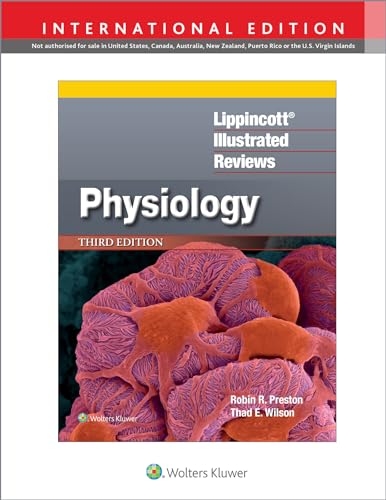
Lippincott illustrated reviews : Physiology / Robin R. Preston, Thad E. Wilson.
Material type: TextSeries: Lippincott's illustrated reviewsPublisher: Philadelphia : Wolters Kluwer, ©2025Edition: Third editionDescription: viii, 600 pages : color illustrations ; 28 cmContent type:
 - text
- computer
- online resource
- 978-1-97519-666-0
- QP34.5 .P9267 2025
| Cover image | Item type | Current library | Home library | Collection | Shelving location | Call number | Materials specified | Vol info | URL | Copy number | Status | Notes | Date due | Barcode | Item holds | Item hold queue priority | Course reserves | |
|---|---|---|---|---|---|---|---|---|---|---|---|---|---|---|---|---|---|---|
 Reserved Books
|
Taytay College Library Medicine Collection | Non-fiction | QP34.5 .P9267 2025 (Browse shelf(Opens below)) | 1 | Available | URSTAY-6011 |
Includes bibliographical references and index.
"The third edition of Lippincott® Illustrated Reviews: Physiology by Robin R. Preston and Thad E. Wilson, is a non-fiction novel masquerading as a textbook. It tells a tale of how the body works, how it adapts to changes in its internal and external environment, how it ages, and how derangements in organ function cause disease and death. It follows the organization of the human body, each unit addressing a different organ system and considering its role in the life of the individual. Physiology texts typically take a "macro-to-micro" approach, their descriptions of organs following the history of human physiologic discovery (gross anatomy, microanatomy, cellular biology, and, finally, molecular biology). We begin most units by identifying key organ functions and then showing how cells and tissues are designed to fulfill these functions. Although physiologic design is shaped by natural selection and not by purpose, this teleologic approach can help us understand why cells and organs are structured the way they are. It also helps us understand the rationale behind responses to stress that are advantageous in the short term but ultimately may lead to system failure. Understanding the "why" aids retention and gives future health care providers a powerful tool for anticipating how and understanding why disease processes present clinically in the way that they do"-- Provided by publisher.
Description based on print version record and CIP data provided by publisher; resource not viewed.
There are no comments on this title.