
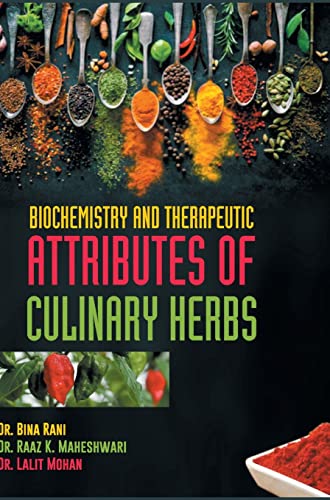
Biochemistry and therapeutic attributes of culinary herbs / Bina Rani.
Material type: TextIndia : Discovery Publishing House, ©2023Edition: 1st editionDescription: 264 pages : illustrations ; 25 cmContent type:
 - text
- computer
- online resource
- 978-9-39491-706-4
- QP141 .R164 2023
| Cover image | Item type | Current library | Home library | Collection | Shelving location | Call number | Materials specified | Vol info | URL | Copy number | Status | Notes | Date due | Barcode | Item holds | Item hold queue priority | Course reserves | |
|---|---|---|---|---|---|---|---|---|---|---|---|---|---|---|---|---|---|---|
 Reserved Books
|
Taytay College Library Medicine Collection | Non-fiction | QP141 .R164 2023 (Browse shelf(Opens below)) | 1 | Available | URSTAY-6138 |
Molecular biology of asexual sporulation in filamentous fungi -- Insight into fungal secondary metabolism from ten years of LaeA research -- RNAi function and diversity in fungi -- Fungal molecular response to heavy metal stress -- Control of gene expression in phytopathogenic ascomycetes during early invasion of plant tissue -- Fungal MAP Kinase-mediated regulatory pathways -- Heterotrimeric G-proteins -- The cell wall polysaccharides of Aspergillus fumigatus -- Chitin synthesis and fungal cell morphogenesis -- Trehalose metabolism: enzymatic pathways and physiological functions -- Regulation of Fungal Nitrogen Metabolism -- Regulation of Sulfur Metabolism in Filamentous Fungi -- The Regulation of Carbon Metabolism in Filamentous Fungi -- Special aspects of fungal catabolic and anabolic pathways -- Genetic and metabolic aspects of primary and secondary metabolism of the Zygomycetes.
This new edition provides a comprehensive look at the molecular genetics and biochemical basis of fungal biology, covering important model organisms such as Aspergilli while also integrating advances made with zygomycetes and basidiomycetes. This book groups a total of 15 chapters authored by expert scholars in their respective fields into four sections. Five chapters cover various aspects of gene expression regulation. These range from regulation in organismal interactions between parasitic fungi and their host plant, heavy metal stress and global control of natural product genes to conidiation and regulation through RNA interference. Two chapters are dedicated to signal transduction, highlighting MAP-kinase-dependent signaling and heterotrimeric G-proteins. Fungal carbohydrates are the subject of the third section, which addresses both polymeric cell wall carbohydrates and trehalose as an important, low molecular weight carbohydrate. The fourth section emphasizes the metabolism of major elements (carbon, nitrogen, sulfur) and critical cellular pathways for primary and secondary products.
Description based on publisher-supplied MARC data.
There are no comments on this title.